Green Media Initiative Launches Digital Disaster Mapping Project for Coastal Communities
 Fouzia Jamil
Green Media Initiative Launches Digital Disaster Mapping Project for Coastal Communities
KARACHI: The Green Media Initiative (GMI), in collaboration with Accountability Lab& Digital Democracy Initiatives(DDI) launched a Digital Disaster Mapping Project aimed at strengthening climate resilience in Pakistan's coastal communities by documenting environmental risks, vulnerabilities, and community needs through a modern digital data system.
The initiative seeks to collect and organize real-time information from climate-vulnerable coastal areas to help government institutions and disaster management authorities make timely, evidence-based decisions for disaster preparedness, response, and recovery.

Speaking at the project's launch, Rafi-ul-Haq said that effective government intervention is only possible when policymakers have access to accurate information about the nature and severity of challenges faced by communities. He noted that coastal regions are increasingly threatened by climate change, including rising sea levels, cyclones, droughts, erratic rainfall, and recurring floods.

He highlighted that these environmental changes have severely affected the livelihoods of fishing communities, while seawater intrusion has damaged agricultural land. Coastal erosion continues to intensify, and many vulnerable households living in fragile structures remain exposed to extreme weather events. He also expressed concern over the growing depletion of mangrove forests, explaining that the lack of alternative fuel sources has forced local communities to cut mangroves for fuel. Mangrove ecosystems serve as vital breeding grounds for fish and shrimp and are essential for protecting biodiversity and sustaining the coastal economy.

Rafi-ul-Haq explained that the pilot phase of the project covers 10 small and large villages, where trained field teams are collecting data through digital survey forms. The surveys document information on livelihoods, household income, health, education, access to basic services, and the impacts of natural disasters.
The collected information will be integrated into a live digital dashboard, which will be hosted on the Green Media Initiative's website. The dashboard will also be shared with key stakeholders, including the Provincial Disaster Management Authority (PDMA), Transparency International, emergency response agencies, and other relevant institutions to support improved planning and disaster risk management.
Speaking on the occasion, Shabina Faraz, Chief Executive Officer of Green Media Initiative, described the project as a significant step toward empowering coastal communities facing the impacts of climate change. She said the Digital Disaster Mapping system would not only identify existing vulnerabilities but also provide reliable data for future policymaking, humanitarian assistance, and post-disaster rehabilitation.

"Disaster mapping is the foundation of effective disaster management," she said.
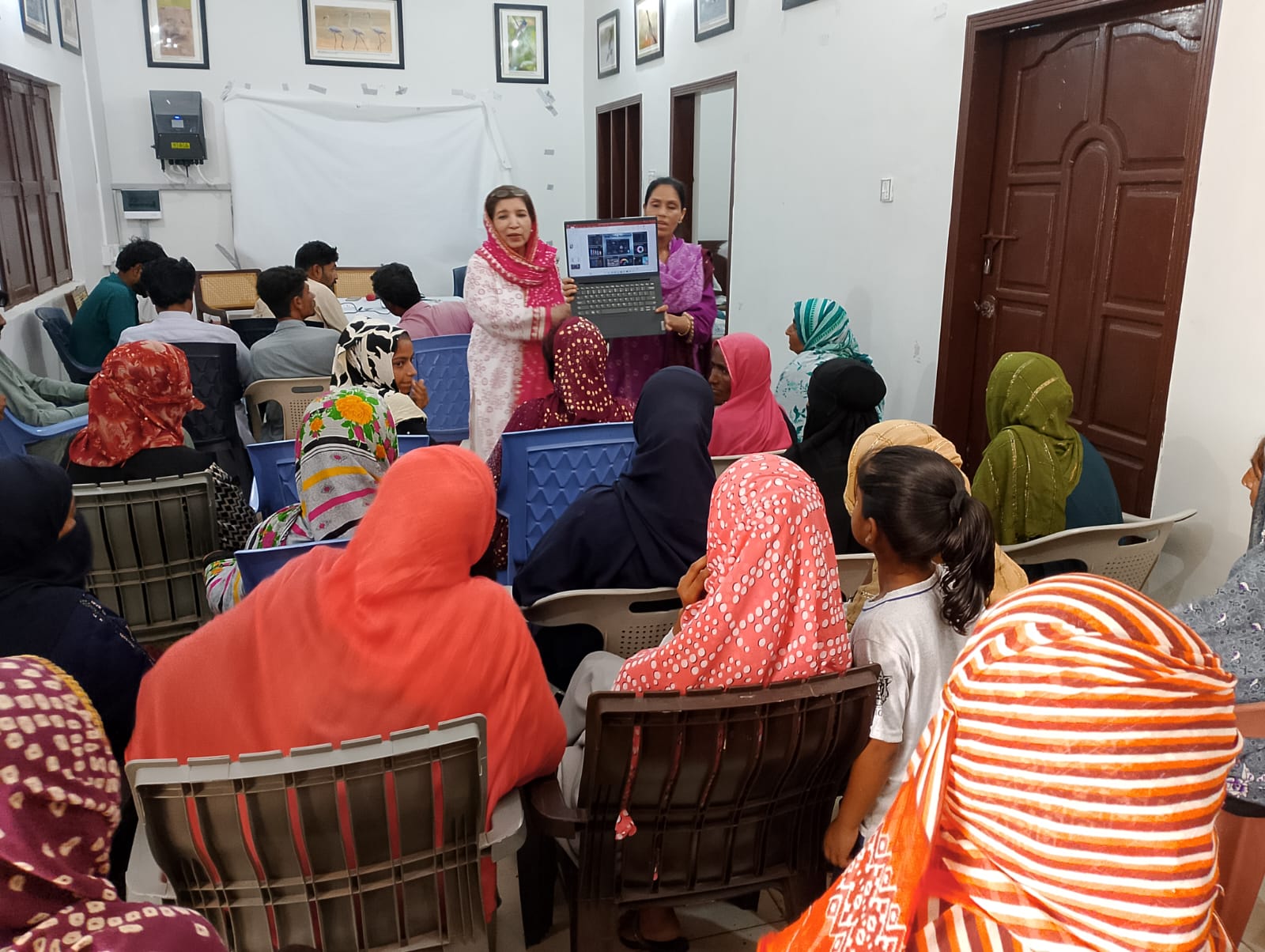
As part of the initiative, special capacity-building workshops were held in Keti Bandar, Thatta district, where community members received practical training in digital documentation and disaster reporting.
Saadia Ubaid Khan, Communications Officer at Green Media Initiative, trained participants in mobile journalism, demonstrating how to produce professional video stories that effectively document local issues and communicate them to the media, government agencies, and development organizations.

In the concluding session, Fauzia Jameel, District Officer and IT Trainer, provided journalists and community leaders with hands-on training in digital disaster mapping tools, survey methodologies, modern data collection techniques, and the use of visual dashboards. Participants also attended a live demonstration on dashboard development, data analysis, and practical applications of the system.
At the conclusion of the project activities, organizers expressed confidence that the digital dashboard would become a valuable resource for policymakers, development partners, humanitarian organizations, and the media. They announced that detailed project findings and reports will be released in the coming months to support coordinated and evidence-based strategies for addressing the growing challenges of climate change in Pakistan's coastal regions.