When Menstruation Meets Crisis: Period Dialogue 2026 Puts Health, Dignity and Bodily Autonomy on the Agenda
 Chehra WebDesk
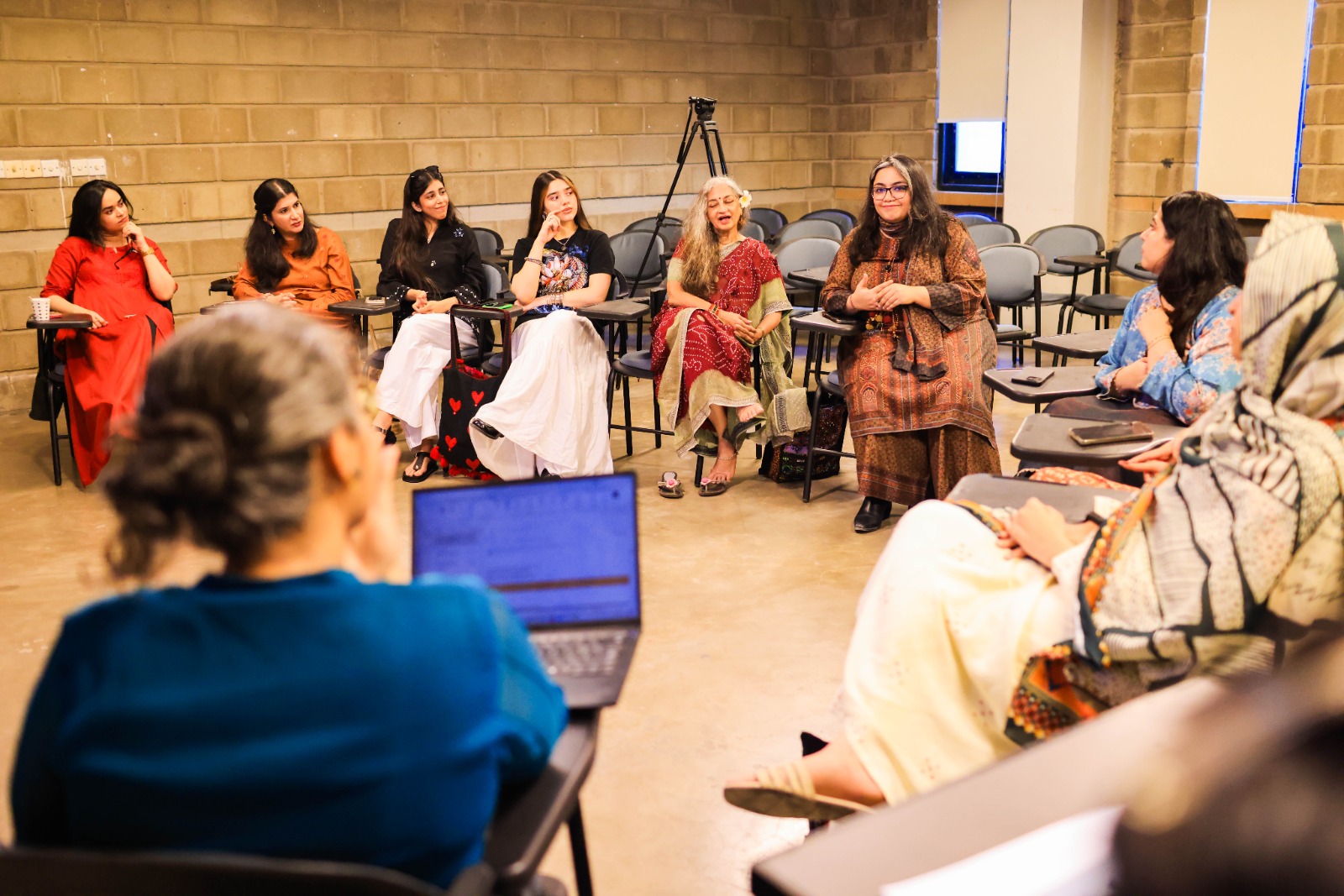
When Menstruation Meets Crisis: Period Dialogue 2026 Puts Health, Dignity and Bodily Autonomy on the Agenda
KARACHI, 25 September 2026 What happens to menstrual health when floods destroy homes, communities are displaced, clean water and sanitation become scarce, and healthcare systems are disrupted?
These urgent questions took centre stage at Period Dialogue 2026, hosted by Baithak – Challenging Taboos in collaboration with Keys Production and the Indus Valley School of Art and Architecture (IVSA) in Karachi on 18 September.

Bringing together voices from research, policy, advocacy, development and the arts, the dialogue reframed menstrual health and dignity (MHD) as more than a private or individual concern. Participants examined how menstruation is shaped by healthcare systems, water, sanitation and hygiene (WASH), infrastructure, financing, public policy, culture, social norms and the environments in which people live.

The event opened with a Kathak performance, using movement and storytelling to explore the body, menstruation and bodily autonomy. Pakistani artist Daniya Kanwal, in her keynote, challenged the silence surrounding menstruation and called for a shift away from secrecy and shame towards dignity and bodily autonomy.
“We bleed, and we shall not stop resisting,” Daniya said.

During a fireside conversation with Mehar Khurshid, Ayesha Amin, Founder and CEO of Baithak – Challenging Taboos, questioned why menstrual health continues to receive inadequate attention from science, policy and public systems.

“If men menstruated, we’d probably be researching how testosterone interacts with gravity or menstruation on Mars. Yet here we are, still fighting for safe menstrual products,” Amin said. “So we must ask: why are women’s bodies expected to endure what science, policy, and systems have simply chosen not to understand?”
From crisis response to systems of care
Participants then moved into three parallel discussions, examining menstrual health and dignity through interconnected lenses.

The One Health, Care, Systems & Policies discussion explored how menstrual needs are frequently addressed only after a crisis has occurred. Participants noted that emergency responses often focus on distributing menstrual products while overlooking privacy, safety, healthcare, sanitation, waste management and longer-term systems of care.
The discussion highlighted the importance of stronger community-to-government pathways, meaningful youth participation and integrating menstrual health and dignity into disaster preparedness and everyday institutional systems.
The Decolonizing Bodies, Indigenous Knowledge & Cultural Practices discussion examined whose knowledge shapes the way menstruation is understood. Participants reflected on body shame, Eurocentric beauty standards, the male gaze and the marginalisation of indigenous knowledge, while exploring folklore, oral histories and everyday cultural practices surrounding menstruation.
Meanwhile, Innovation, Financing & Reimagining MHD invited participants to work through a hypothetical PKR 100 million budgeting exercise, considering how resources could be allocated across education, infrastructure, research, policy, social norms and menstrual products.
Participants then revisited their priorities through a simulated flood scenario, highlighting the challenge of balancing immediate humanitarian needs with investment in sustainable, community-led systems.
Art opens another conversation
Alongside the dialogue, Vessel | Wasā’il, a South Asian art exhibition exploring menstruation, bodies, inequality, humanitarian crises, resistance and reimagining, was inaugurated by artist Amin Gulgee.

Curated by Ramsha Siddiqua, the exhibition brought together paintings, illustrations, photography, textiles and installations. It remained open to the public on 19 and 20 September at IVS Karachi.

For Baithak – Challenging Taboos, Period Dialogue is intended to be more than a one-day event. The initiative seeks to create an ongoing platform connecting lived experiences with policy, research, advocacy and creative practice.
“The conversation does not end here.”

Baithak aims to continue creating spaces for Period Dialogue until menstrual health and dignity are accessible to and upheld for all menstruators.
For more information, partnerships and future collaborations:
baithak.pak@gmail.com
zainabrasool2020@gmail.com