She Stopped Counting the Dead and Started Saving Lives
 Imran
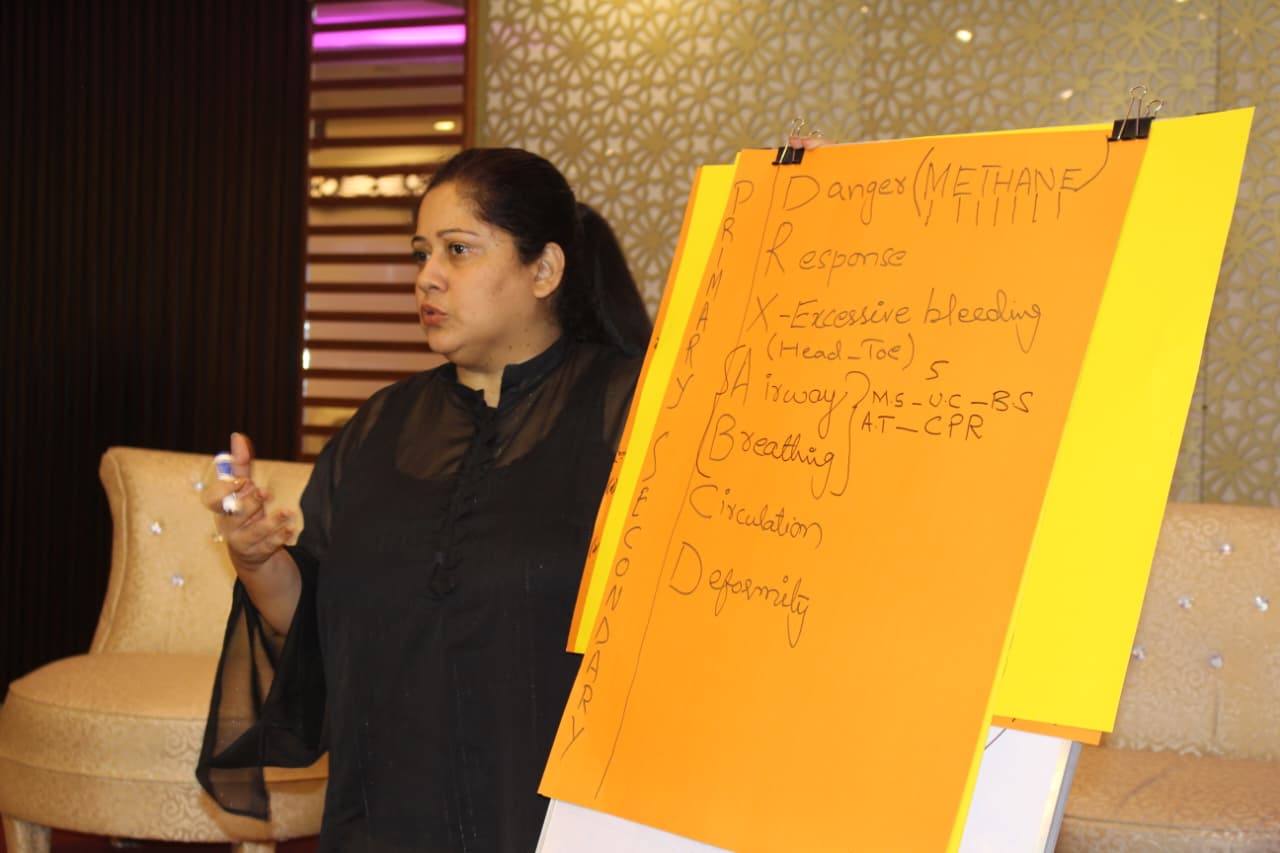
The inspiring journey of Dur-e-Shahwar Channa, who turned the painful realities of journalism into a mission to make people safer — physically, digitally and psychologically.
Sometimes, a single question can change the direction of an entire life.
It can begin as a quiet discomfort, grow into a persistent question, and eventually become a mission that refuses to let a person remain a passive observer of suffering.
For Dur-e-Shahwar Channa, that turning point came during her early years in journalism. She was reporting the news at a time when attacks on journalists and the deaths of colleagues were painfully familiar realities in Pakistan. Every day brought another disturbing story, another colleague under threat, another reminder of how dangerous the profession could be.
But somewhere between reporting these tragedies and witnessing their human cost, a question began to take shape: Was it enough to keep writing about journalists being attacked and killed, or could she do something to help prevent such tragedies?
She chose the latter.
Instead of limiting herself to documenting the consequences of danger, she began working to prepare people to face it. What followed was a journey that expanded from journalist safety to first aid, disaster preparedness, digital security and psychosocial well-being.
Her story carries a powerful message: safety is not a privilege reserved for a few. It is a life skill that everyone deserves the opportunity to learn.
When the News Became More Than a Story
Originally from Sindh and based in Karachi, Dur-e-Shahwar Channa began her journalism career around 13 to 14 years ago. During those early years, she witnessed the difficult conditions faced by journalists in Pakistan, where attacks and killings were a recurring source of anxiety within the profession.
For her, these incidents were not simply headlines or statistics. Behind every report was a human being, a family and a life that could be changed forever.
The experience forced her to look beyond the immediate responsibility of reporting what had happened. She began thinking about what could be done to prevent harm before it became another tragic headline.
That shift in perspective became the foundation of her professional transformation.
She did not abandon the importance of journalism. Instead, she found another way to serve the community that journalism had introduced her to: by helping people recognise risks, prepare for emergencies and protect themselves and others.
It was a decision rooted in empathy, but sustained by a practical determination to make a difference.
From Reporting Danger to Preparing People for It
Driven by her interest in safety and security, Channa travelled abroad to undertake training courses with different organisations. After returning to Pakistan, she began her work by training journalists in safety and security.
Over time, she realised that the need extended far beyond newsrooms.
Human rights defenders also faced threats. Members of the transgender community, teachers, students and people working in different sectors could encounter physical danger, online abuse or other emergencies without having the knowledge and resources to respond effectively.
Her work gradually expanded to include these communities.
Over approximately 13 to 14 years, she has worked across Pakistan and contributed to training thousands of people. Her objective has remained consistent: to make safety awareness more accessible, particularly to people and communities that rarely have opportunities to attend formal training programmes.
For Channa, the value of training lies not simply in the number of sessions conducted. It lies in whether people can use what they learn when it matters most.
A person who knows how to recognise a danger, seek help or provide appropriate initial assistance may be better prepared to respond when an emergency occurs.
That knowledge can travel far beyond the training room.
The Dangerous Cost of Taking Safety for Granted
One of the biggest challenges Channa identifies is the tendency to underestimate safety and security.
Pakistan faces multiple hazards, including road accidents, fires and natural disasters. Yet many people have limited access to practical guidance on how to respond when something goes wrong.
First aid, in particular, is often treated as a specialised skill rather than essential public knowledge.
People may want to help an injured stranger, but good intentions alone are not always enough. Without appropriate knowledge, an intervention can sometimes worsen an injury or delay the assistance a person needs.
For Channa, this gap is not merely a technical problem. It reflects a broader failure to make preparedness a priority.
She has tried to draw the attention of different institutions to the importance of safety training. But, as she explains, these concerns are not always taken seriously.
The challenge, therefore, is twofold: people need access to training, and institutions need to recognise that preventing harm deserves sustained investment.
A society cannot eliminate every accident or disaster. It can, however, work to ensure that more people know how to respond safely and effectively when emergencies occur.
First Aid: A Small Skill That Can Make a Life-Saving Difference
At the heart of Channa's message is a simple but urgent idea: everyone should have access to basic life-saving skills.
Consider a road accident. Bystanders may rush to lift an injured person and place them in a vehicle, believing that immediate movement is always helpful. But if a spinal or neck injury is suspected, unnecessary movement can cause further harm.
Similarly, severe bleeding, unconsciousness or a person choking requires an appropriate response. Knowing when and how to act matters.
Channa wants first-aid knowledge to become a normal part of everyday life rather than something available only to medical professionals, emergency responders or specially trained workers.
Her vision includes ordinary citizens, families, young people and communities that have historically had limited access to such training.
The underlying principle is straightforward: people should not have to wait until an emergency occurs to discover that they lack the skills to respond.
You do not always need to be a doctor to help save a life. But you do need to know how to help safely.
That is why practical demonstrations, accessible training and wider public awareness matter so much.
Why Women Must Be at the Centre of Safety Training
For Channa, women are not a secondary audience in safety education. They are central to its success.
In many households, women are responsible for caring for children, older family members and other relatives. They may be the first people present when a child begins choking, an elderly person loses consciousness or an accident occurs at home.
Yet many women, particularly those in underserved communities, have limited opportunities to receive practical first-aid training.
Channa argues that this gap must be addressed through community-based approaches, including training sessions in villages and the creation of women's groups that can learn and practise these skills together.
Her argument also recognises the cultural barriers that can affect access to emergency assistance.
In some settings, a woman may feel uncomfortable receiving first aid from an unrelated man, or suitable assistance may not be readily available. Ensuring that more women are trained can help communities respond more effectively in such circumstances.
The issue is not simply about teaching women another skill. It is about expanding their ability to protect themselves, their families and their communities.
When women have access to practical safety knowledge, the benefits can extend across generations.
A mother who learns how to respond to an emergency can pass that knowledge to her children. A trained community member can help others recognise risks. A group of women can become a source of support and awareness for an entire neighbourhood.
In this way, safety training becomes an investment in community resilience.
In a Digital World, Safety Must Go Beyond the Physical
As technology transformed the way people communicate, work and share information, Channa recognised another growing concern: digital security.
Social media is now part of everyday life. Young people use online platforms, journalists depend on digital tools for their work, and institutions increasingly rely on technology to manage information and communication.
But knowing how to use a platform does not necessarily mean knowing how to use it safely.
Weak passwords, compromised accounts, exposure of personal information and data breaches can create serious risks for individuals and organisations.
For journalists and human rights defenders, digital threats can also affect their professional activities, privacy and personal security.
Channa therefore expanded her approach to include digital safety, recognising that protection in the modern world cannot be limited to physical surroundings.
People must also understand how to safeguard their accounts, protect sensitive information and reduce avoidable digital risks.
This is particularly important for younger generations, who may be highly familiar with digital platforms but have not necessarily received structured training in online security.
Her message is relevant to everyone: digital awareness should not be treated as an optional technical skill. It is an increasingly important part of personal and professional safety.
Three Dimensions of Safety: Physical, Digital and Psychosocial
One of the defining features of Channa's work is her holistic understanding of safety.
She views it through three interconnected dimensions: physical, digital and psychosocial security.
Physical safety
First aid, emergency response, risk assessment and disaster preparedness help people recognise physical dangers and respond appropriately.
Digital safety
Protecting online accounts, personal information and digital identities is essential in an increasingly connected world.
Psychosocial well-being
Emergencies, violence, threats and prolonged stress can affect mental well-being, relationships and a person's sense of connection with the world around them.
hese dimensions are closely connected. A dangerous incident can cause physical injury, expose someone to digital threats and leave lasting psychological effects.
Addressing only one aspect may leave other important needs unmet.
Channa's approach brings these concerns together within a broader framework of safety and security. It reflects an understanding that protecting people means considering not only their immediate physical circumstances but also their digital lives and emotional and social well-being.
Another important element of her work is the transfer of knowledge.
She wants people who receive training to share what they have learned with others, particularly in communities where access to professional training is limited.
The aim is to create a multiplier effect: one trained person helps others, who in turn become better equipped to support their own communities.
Journalists Cannot Keep Others Informed If Their Own Safety Is Ignored
Journalist safety remains a central part of Channa's mission.
Reporters and camera crews may work in dangerous environments while covering accidents, disasters, violence and other high-risk events. Their responsibility to inform the public does not remove their right to protection.
Channa argues that media organisations must take greater responsibility for preparing their employees to work safely.
This means providing appropriate safety training, ensuring access to necessary protective equipment and helping journalists understand the risks associated with different assignments.
It also means acknowledging that journalists have personal safety concerns that cannot be dismissed simply because they are accustomed to working under pressure.
A reporter's experience does not automatically make them prepared for every emergency. Nor should an organisation assume that a journalist who regularly covers dangerous situations needs no additional support.
Safety should be part of newsroom planning, not an afterthought once an incident has occurred.
Her argument is particularly important for smaller media organisations, where financial and logistical constraints may make structured training difficult to arrange.
She believes larger institutions and organisations with relevant expertise can help bridge this gap by supporting training for journalists working in smaller outlets.
Ultimately, a newsroom's responsibility should extend beyond producing stories. It should also include making reasonable efforts to ensure that the people producing those stories can do their work safely.

Change Does Not Always Begin With a Large Budget
Channa does not believe that limited resources should become an excuse for inaction.
She proposes a practical approach: whenever someone receives training, they should be encouraged to share their knowledge within their own institution or community.
A trained employee can organise an awareness session for colleagues. Journalists can conduct training at press clubs. Larger organisations can support smaller outlets. Experienced trainers can help reach communities that are often overlooked.
These steps cannot replace properly funded, professional training where it is needed. But they can help expand awareness and build a culture in which learning about safety becomes a shared responsibility.
Her approach recognises the value of collective action.
Instead of waiting for every institution to develop its own programme from scratch, people can build on existing knowledge, resources and professional networks.
A single training session may reach a limited number of participants. But if those participants pass on what they have learned, the impact can grow.
This is how a small initiative can become part of a wider movement.

The Government Must Help Turn Awareness Into a System
For Channa, community initiative is essential, but it cannot carry the entire responsibility.
She believes the government should work with public and private organisations that have expertise in safety and security to develop a more systematic approach to training.
Her proposal is to begin within government institutions and gradually expand the process across departments, including education and health.

People who demonstrate the potential to become trainers could receive more advanced instruction and then help train others.
This would allow knowledge to spread from one institution to another and, eventually, across provinces and the country.
Such an approach would require coordination, resources and a commitment to making safety education an ongoing process rather than an occasional activity.
It would also help ensure that training reaches people who might otherwise remain excluded because of their location, financial circumstances or lack of professional connections.
The broader goal is a culture of preparedness in which individuals and institutions understand their responsibilities before an emergency occurs.

Her Real Achievement Is the Knowledge She Leaves Behind
Dur-e-Shahwar Channa's journey is a reminder that professional purpose can evolve when a person looks beyond the immediate demands of a job and asks what else they can contribute.
She began as a journalist reporting a dangerous reality. She went on to work in safety and security training, extending her efforts from journalists to human rights defenders, transgender communities, teachers, students and others.
Her story is not about a single dramatic rescue or one extraordinary moment. It is about the quieter work of preparing people before they find themselves in danger.
It is about helping a woman learn how to respond to an emergency at home, a journalist understand the risks of an assignment, a young person protect a digital account, or an institution recognise that safety is part of its responsibility.
These efforts may not always attract headlines. But their value can become clear at the moment someone knows what to do instead of standing helplessly by.

Channa's vision is of a Pakistan where basic life-saving skills are more widely accessible, women are included in safety education, journalists receive meaningful protection and physical, digital and psychosocial well-being are recognised as interconnected needs.
Achieving that vision will require more than the dedication of one individual. It will require communities, media organisations, training institutions, private partners and government departments to work together.
Yet every wider movement begins somewhere: with a question, a decision and the willingness to act.
Channa's journey began when she realised that reporting another tragedy was not the only way to respond to it. She chose to work on the other side of the story — the side that prepares people, reduces avoidable risks and helps communities become more resilient.
Because the real measure of change is not only how well we report a tragedy after it happens, but how effectively we prepare people to face danger before it is too late.
And sometimes, the most powerful story is not the one that tells us how many lives were lost. It is the one that inspires us to ask how many lives we might still save.