ROUND TABLE CONFERENCE ON DEFENSIVE AND OFFENSIVE ECONOMICS (NON-TRADITIONAL SECURITY)
 Imran
ROUND TABLE CONFERENCE ON DEFENSIVE AND OFFENSIVE ECONOMICS (NON-TRADITIONAL
SECURITY)
ISLAMABAD – A Round Table Conference titled “Defensive and Offensive Economics
(Non-Traditional Security) led by the National Security Division (NSD) of the
Government of Pakistan in collaboration with the National Institute of Maritime
Affairs was organized at Bahria University, Islamabad. Engr.
Aamir Hasan, Secretary NSD graced the occasion as the Chief Guest.
The event was moderated by Mr. Babar Bilal Haider, Director Indian Ocean Study Centre, NIMA.
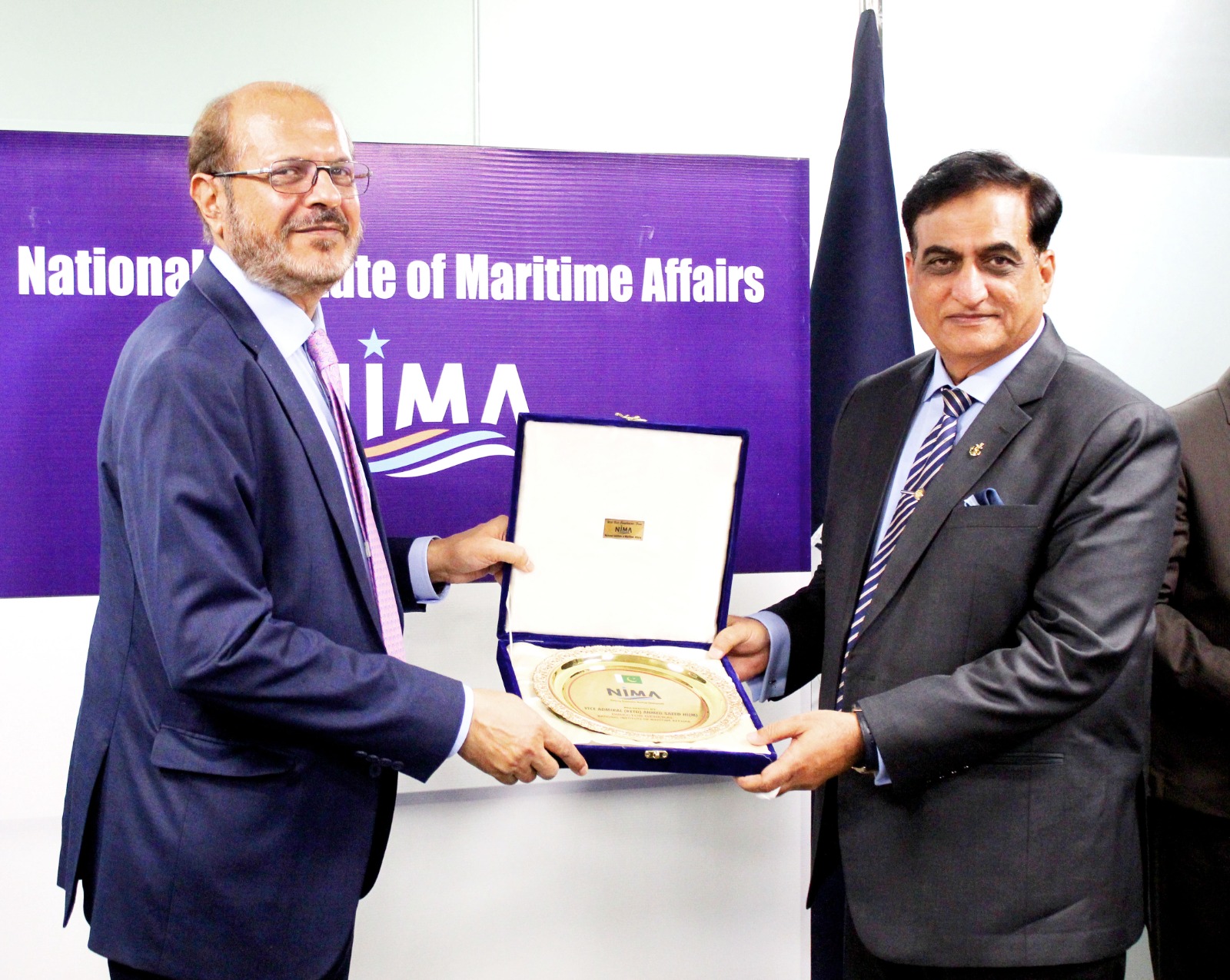
Vice Admiral (Retd) Ahmed Saeed HI(M), DG NIMA formally commenced the
proceedings by highlighting the importance of non-traditional maritime security
threats vis-à-vis a resilient national economy.
The Chief Guest, Engr. Aamir Hasan, Secretary NSD emphasized on identifying and strengthening the underlying factors of defensive and offensive economics for a stronger sovereign state. He called for the development of a blue roadmap to achieve said goals.
He also appreciated NIMA and NSD for organizing discourse on the topic.
Earlier, Mr. Faheem Sardar, Senior Policy Specialist in Non-Traditional
Security at NSD, while addressing the concept of Defensive & Offensive
Economics, shed light on strategies that nations can adopt to safeguard their
interests and build resilience against shocks.
Cdre (Retd) Bilal Abdul Nasir SI(M), Director NIMA Islamabad dilated upon non-traditional threats in relation to maritime affairs and Blue Economy.

He concluded that we need to harness the true potential of maritime economy.
The conference was well-attended by government officials, reps of think tanks,
academia, and key maritime stakeholders.

In the end, the DG NIMA expressed gratitude to all participants for their active involvement and valuable contributions.